
NextGen FounderEmpowering Future Leaders and InnovatorsThe challengeHow to EnterPartner with usContact
Schools, parents and young people

How to Enter

How to Enter the UK AI Business Challenge 2027

What would you change about your school, your neighbourhood or a local business? Start with something you’ve noticed. Use AI to explore what might work, then turn your best idea into a business plan you can explain in three minutes.

You don’t need to know how to code or have a business idea ready. One good question is enough to get started.

See the four stages ↓
Two students sort second-hand school jumpers on a clothes rack.
01 · Find a problemCould a school uniform swap make it easier to find the right size?

The competition timeline

Four stages, from first idea to live final.

Here’s the proposed 14-week plan. The first two stages help you develop your idea. The judges shortlist finalists after reviewing the recorded pitches in Stage 3. Exact dates and submission instructions will be confirmed before entries open.

01 · Weeks 1–2 · Getting started

Find a real problem

  • What to do. Notice a problem at school, in your neighbourhood or in a local business. Think about who it affects.
  • What to prepare. A short outline explaining the problem, why it matters and where AI might help.
  • What happens next. An initial eligibility and topic check. Use this stage to narrow your idea before building your plan.

02 · Weeks 3–8 · Progress check

Build your business idea

  • What to do. Work out who your customer is, how your solution would work and what you’d test first with a £5,000 simulated budget.
  • What to prepare. A one-page business plan with your proposed solution, how you’d use AI and how you’d spend the budget.
  • What happens next. Use the progress check to spot gaps and improve the plan before recording your pitch.

03 · Weeks 9–13 · Shortlisting

Submit your recorded pitch

  • What to do. Explain the problem, your solution, the budget and how you checked AI’s suggestions.
  • What to submit. A three-minute video in weeks 9–10.
  • What happens next. In weeks 11–13, the judges review entries against the published criteria and invite shortlisted entrants to the live final.

04 · Week 14 · Finalists only

Present at the live final

  • What to prepare. A live presentation about your idea and the decisions you made.
  • What to do. Present to a panel of professionals and answer their questions.
  • What happens next. The panel makes its final decision. Prize and announcement arrangements will be confirmed separately.
Students sketch a booking flow for a school uniform swap.
02 · Build your ideaSketch how someone could find their size and reserve a uniform.

Start with something you notice

What if a bakery could waste less bread?

Imagine your local bakery has bread left over most weekdays, but sells out on Saturdays. You could use AI to look for patterns in sample sales figures and suggest how much to bake on different days.

01 · Explore

Check the pattern

Compare AI’s suggestion with the sample sales figures. What would you want to ask the bakery owner before changing the baking schedule?

02 · Test

Start with one type of bread

Use the £5,000 simulated budget to plan a small trial. How would you tell if it reduced waste without disappointing customers?

03 · Pitch

Explain your choices

In three minutes, show the problem, where AI helped, what you checked and what you would try first.

Two more ideas to explore

  • How could a school uniform swap make it easier for families to find the right size?
  • How could a local café make its menu easier to understand for visitors who speak different languages?
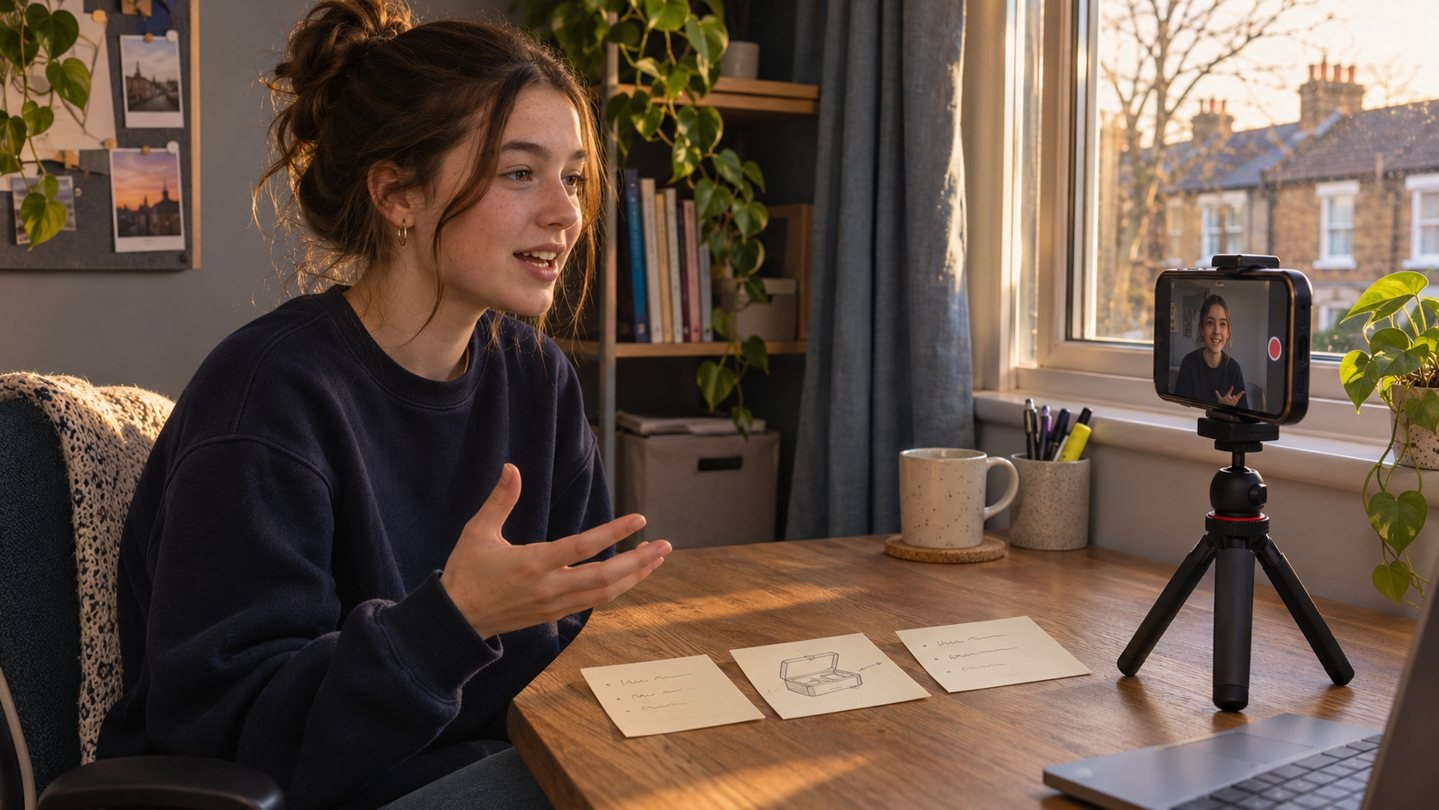
A student practises a pitch at home using a phone on a tripod and cue cards.
03 · Record your pitchThree minutes to explain an idea you believe in.

Skills you can use again

What you’ll learn along the way.

Take something you’ve noticed and work out what you could do about it. By the end, you’ll have a business plan and a three-minute pitch that show how you made your decisions. The same skills can help with school projects, future interviews and ideas of your own.

01

Understand the problem

Work out who faces the problem, what they do today and what would make things better for them.

02

Use AI with judgement

Learn to ask better questions, compare suggestions and check the facts. Decide what to use, what to change and when to ask a person for help.

03

Make your budget work

Use the £5,000 simulated budget to choose what to spend on, what to test first and how to tell if your idea is working.

04

Explain your thinking

Build a three-minute pitch around the problem, your solution and the choices you made. Practise making your case clearly to someone hearing it for the first time.

Beyond the pitch

Where could your idea take you?

The challenge gives you a project to talk about in your own words. It could also help you discover a profession or type of work you hadn’t considered before.

01

Explore work experience

We hope to offer work experience or internship opportunities through participating organisations. Any placements will depend on what partners can offer and what is suitable for your age. We’ll share details if places are confirmed.

02

Potential cash prizes

There may be sponsor-funded cash prizes. We’ll announce the details once sponsorship and prize arrangements are confirmed.

03

A project you can reflect on

What did you test? What did you change after checking AI’s suggestions? If you later apply to university, you could draw on those decisions in your personal statement where they relate to your chosen course.

04

Pitch to a professional panel

Finalists are expected to present to a panel made up of professionals. We’ll introduce the judges and share their backgrounds nearer the event.

Why Oscar Ip & Co. Chartered Accountants is running this challenge

Learn to put AI to work.

A lot of young people hear that AI might take over parts of the work they hope to do. We want them to have a chance to try it for themselves and see where it can help them do better work.

As chartered accountants, we see how often good business decisions come down to asking the right questions, checking the numbers and weighing up what people need. AI can help you explore more options, spot patterns and improve a first draft. You still decide what’s worth trying and explain why.

That’s why we’ve brought AI, business planning and financial skills together in one challenge. We want young people to leave with the confidence to use AI on a problem they care about, and the judgement to know when its answers need checking.

Who can enter

Open to curious minds.

No coding or business experience is needed. Bring your curiosity, develop your own thinking and show us what you would do.

Young people

Aged 12–17 in the UK

Enter individually with parent or guardian consent. Initial outreach focuses on North West England, with potential to accept entries from across the UK.

Parents & guardians

Involved from the start

Consent and communication follow a parent- or guardian-inclusive process. No one needs to invest money, buy software or register a business.

Schools & youth groups

Learning beyond the classroom

Share the opportunity, arrange an introductory talk or workshop, and offer supervised guidance, while each young person’s ideas stay their own.

Fair play

Responsible AI. Your own thinking.

01

Be open about help

Guidance is part of learning. Say what support you had from AI or from adults.

02

People stay in charge

Check what AI tells you, recognise its limits and explain your own choices.

03

Keep information safe

Never upload confidential or personal information to AI systems.

04

Your idea stays yours

Young people keep ownership of their ideas and their work.

05

No money needed

The £5,000 is simulated. You don’t need to spend money, buy software or register a business.

06

Safe and supported

Safeguarding, consent and privacy are agreed before launch. Images and stories are only used with permission.

Your entry checklist

Before you enter.

See what you’ll need to get started and how the challenge is planned to work.

Working on your idea

Do I need to know how to code?

No. No coding or business experience is needed. A clear idea, a simple workflow or a small demonstration can explain how your solution would work.

Can AI or adults help me?

Yes, guidance is part of learning. Explain the support you receive, check AI outputs, and make sure you can describe the thinking behind your work.

Will I receive £5,000?

No. The £5,000 is a simulated planning budget used to practise real business decisions. It isn’t a grant, cash award or prize.

Entering the challenge

How much does it cost to enter?

The challenge is planned to be free to enter. Final rules and participation arrangements will be confirmed before launch.

Can I enter as a team?

The proposed pilot is for individual entries, with parent or guardian consent.

When does it start, and where is the final?

The first edition is planned for 2027. Dates, entry arrangements and the final venue will be confirmed and shared with everyone who registers interest.

Are there prizes?

There may be sponsor-funded cash prizes. We’ll announce the details once sponsorship and prize arrangements are confirmed.

Register interest

Be the first to know.

Entries aren’t open yet. Please check back for updates on when registration opens.

Participant details and consent

A parent or legal guardian can complete the participant and guardian details and give consent in one form.

Questions? Email the challenge team.

Registration is not open yet

We’re currently not accepting registrations or expressions of interest. Please check back for updates.